Xiaomi HyperOS 3.1 New Features: UI Upgrades & Support End for Older Phones
bigsansar | Jan. 23, 2026
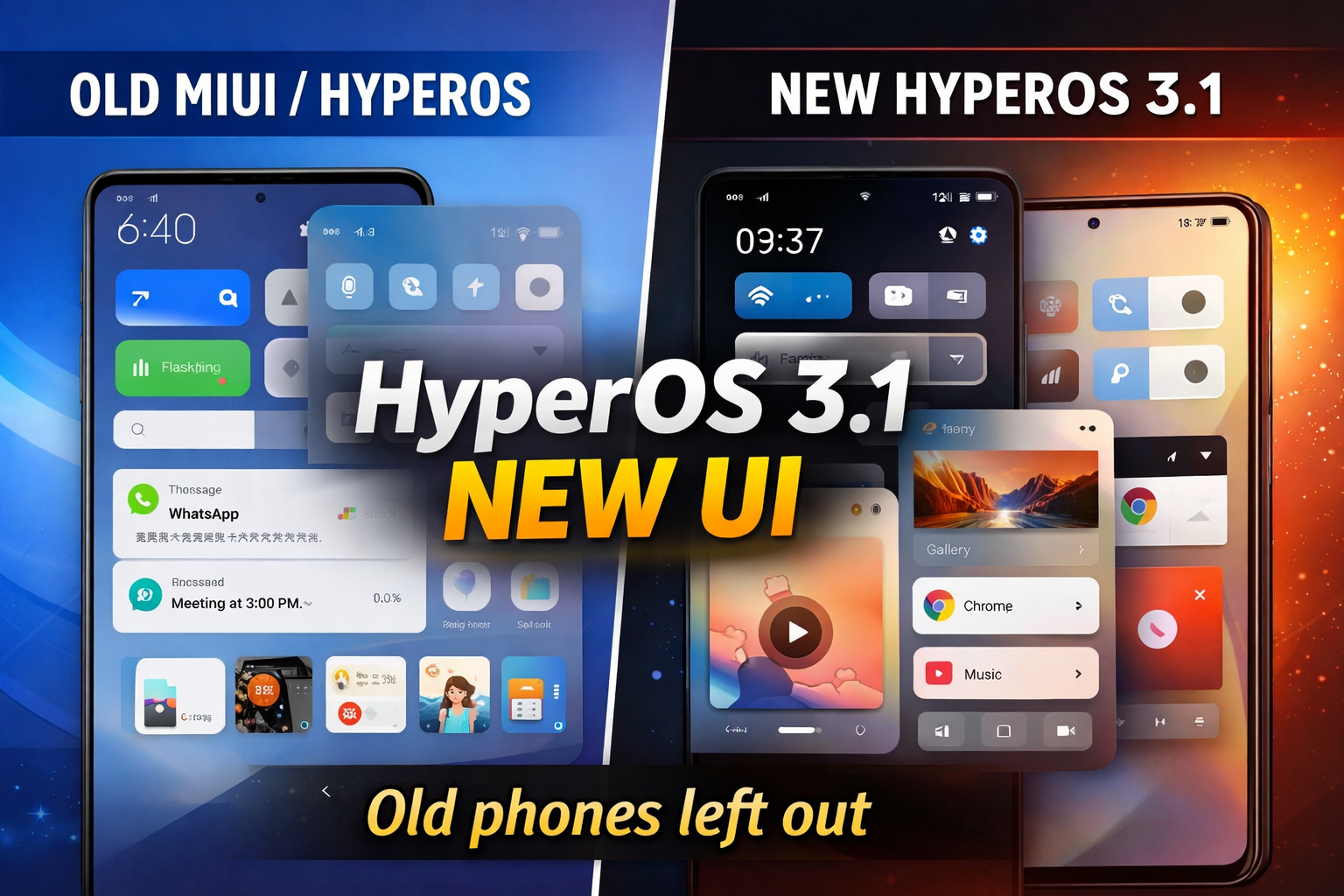
Xiaomi has officially released HyperOS 3.1, a major software update that brings significant UI upgrades, smoother animations, and improved performance. However, the update also comes with a controversial decision: HyperOS 3.1 will only be available for Android 16-based devices, meaning many older Xiaomi, Redmi, and POCO phones will not receive this update. This marks a clear shift in Xiaomi’s software support strategy.
Key New Features of HyperOS 3.1
HyperOS 3.1 focuses mainly on enhancing the user interface and overall user experience. The update aims to make the system feel more modern, fluid, and responsive. Here are the main improvements:
1. UI Redesign and New Look
HyperOS 3.1 introduces a refreshed and more modern UI design. The notification panel, settings, and home screen experience all receive a cleaner and more minimal look. This new UI makes the device feel more polished and premium.
2. Improved Multitasking and Recents View
The update brings a more refined multitasking experience, including a new recents view that resembles iOS-style card layout. Switching between apps becomes smoother and faster, improving overall usability.
3. Control Center and Quick Settings Improvements
HyperOS 3.1 improves the layout and usability of the control center. Quick toggles become more accessible and easier to use. Reports also suggest that customization options for tiles may be added, allowing users to personalize their control center.
4. Better Performance and Memory Management
HyperOS 3.1 refines memory management, making app switching and multitasking more responsive. The update is expected to improve system stability and speed, resulting in faster app launches and smoother UI transitions.
5. Security and Privacy Enhancements
Xiaomi has also focused on security and privacy improvements. Enhanced app permission controls and a better privacy dashboard help users protect their data and increase transparency.
Will HyperOS 3.1 Be Available for All Phones?
The most important news about HyperOS 3.1 is that it will not be available for many older devices. Xiaomi has narrowed the update eligibility, and only Android 16-based devices will receive HyperOS 3.1.
This means:
Devices that will not receive Android 16 will not get HyperOS 3.1.
Many older Xiaomi/Redmi/POCO models will remain on HyperOS 3 (Android 15).
The new UI upgrades and features will be limited to selected devices only.
Example Devices That May Not Receive HyperOS 3.1
Several reports indicate that older flagship and mid-range models like Xiaomi 12 series, Redmi Note 12 series, and POCO F5 may not receive HyperOS 3.1. This shows Xiaomi’s shift toward supporting only newer hardware.
Why Did Xiaomi Make This Decision?
HyperOS 3.1 is based on Android 16, which introduces new APIs and features that improve UI, security, and performance. Implementing these features on Android 15 devices can be difficult or impossible, which is likely why Xiaomi chose to restrict the update.
However, Xiaomi will likely continue providing security patches for older devices, even if they do not receive HyperOS 3.1.
Why HyperOS 3.1 New Features Matter
HyperOS 3.1 is not just about visual changes. It aims to improve the overall device experience by making the system more responsive and modern. If you are using a newer Xiaomi phone, HyperOS 3.1 can make your device feel faster and more polished.
But for older phone users, this update restriction means missing out on new features and UI upgrades, which can be frustrating.
Xiaomi HyperOS 3.1 brings major UI upgrades, performance improvements, and a modern user experience. However, it also ends support for many older devices by limiting the update to Android 16-based models. This update marks a clear shift in Xiaomi’s software strategy and highlights the growing gap between new and old hardware.
If you want the HyperOS 3.1 experience, make sure your device is eligible and supports Android 16.
0 COMMENTS:
POCO X8 Pro Max: Huge Battery, Powerful Performance & Full Rumors Explained (2026)
Discover everything about POCO X8 Pro Max, including rumored 7000mAh battery, powerful performance,…

Xiaomi 17 Ultra Camera Review: LOFIC Sensor & Mechanical Zoom
Explore the Xiaomi 17 Ultra’s camera with LOFIC HDR sensor, mechanical zoom, ultra-wide and front c…
Xiaomi 17 Ultra & Xiaomi 17 Launched with Snapdragon 8 Gen 5 and Leica Cameras
Xiaomi has launched the Xiaomi 17 and Xiaomi 17 Ultra featuring Snapdragon 8 Gen 5, Leica-tuned cam…
Xiaomi HyperOS 4.0 (Android 17) – Eligible Devices List
Discover the full list of Xiaomi, Redmi, and POCO devices eligible for HyperOS 4.0 (Android 17). Ch…
Xiaomi HyperOS 3.1 Introduces Super OTA for Faster Updates
Xiaomi HyperOS 3.1 introduces Super OTA to make software updates faster, smoother, and easier to in…
Xiaomi 17 Pro Max Global Variants, Specs & Launch | New Colourway Leaks
Discover the Xiaomi 17 Pro Max global variants with new colour options. Get leaked specifications, …
Xiaomi 17 & 17 Ultra Launch India & Global 2026 | MWC Pre-Launch Updates
Discover the latest Xiaomi 17 and Xiaomi 17 Ultra launch updates for India and global markets ahead…
Xiaomi HyperOS 3.1 New Features: UI Upgrades & Support End for Older Phones
Xiaomi HyperOS 3.1 brings major UI upgrades, smoother multitasking, and better performance. But the…
Xiaomi Redmi Note 15 Pro 5G Set for a Powerful Global Debut
Xiaomi Redmi Note 15 Pro 5G is expected to launch globally with a premium design, AMOLED display, s…
Xiaomi Watch 5 Review: EMG Technology, Health Tracking & Features Explained
Discover the Xiaomi Watch 5 with advanced EMG technology. Learn how it tracks muscle activity, hear…