TV App Whiplash: Shutdowns, Rebuilds & New Gatekeepers
bigsansar | March 8, 2026
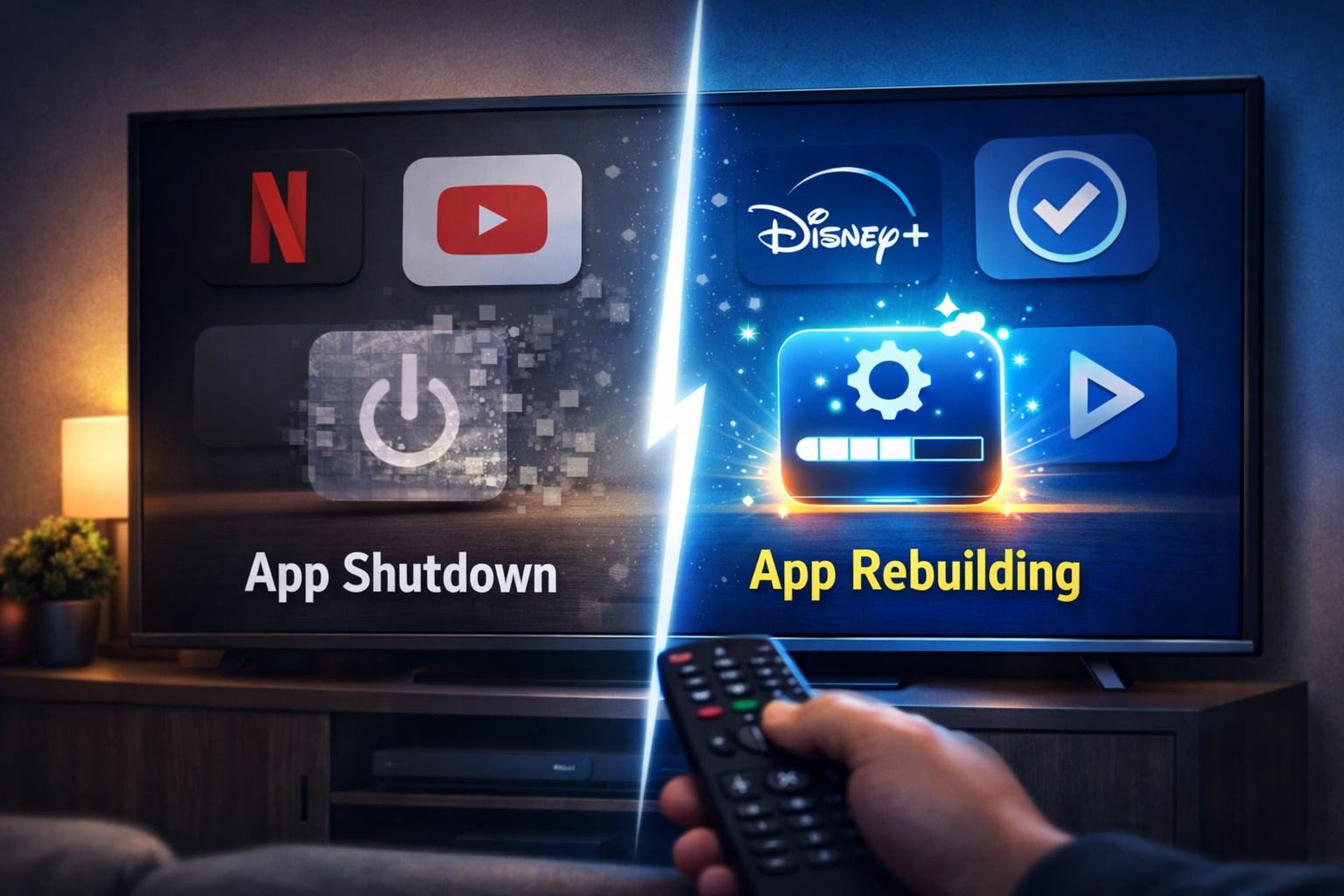
The TV app ecosystem is experiencing rapid transformation. In recent years, many streaming and smart TV applications have either shut down or undergone complete redesigns. This constant change creates uncertainty for users and developers alike. More importantly, it reveals a deeper structural shift in how digital platforms control access, distribution, and content visibility.
This situation is often described as a “whiplash” effect — when one TV app disappears while another is rebuilt, reflecting broader industry pressures rather than isolated events.
Why TV Apps Shut Down
There are several realistic and industry-based reasons why a TV app may stop operating:
1. Platform Policy Changes
Smart TV operating systems frequently update their technical and security requirements. If an app fails to meet new standards, it can be removed from the platform.
2. Licensing and Content Rights
Streaming content depends heavily on licensing agreements. When contracts expire or become too expensive, apps may lose access to content, sometimes leading to shutdown.
3. Low User Engagement
If an app does not attract enough active users, companies may decide it is not financially sustainable.
4. Business Strategy Changes
Companies may merge, rebrand, or shift focus to other products, resulting in app discontinuation.
Key Point:
TV app shutdowns are usually business or platform-driven decisions, not random events.
Why Some TV Apps Are Being Rebuilt
Instead of shutting down completely, many companies choose to rebuild their TV apps.
Major Reasons for Rebuilding:
- Improving user interface and experience (UI/UX)
- Enhancing performance and speed
- Strengthening security systems
- Supporting more devices and platforms
- Integrating new advertising or monetization models
Key Point:
Rebuilding allows companies to stay competitive and adapt to modern streaming standards.
The Emergence of a Gatekeeper Layer
One of the most important developments in the TV app ecosystem is the rise of platform control mechanisms.
Today, TV apps must pass through:
- Operating system approval processes
- App store guidelines
- Security compliance checks
- Revenue-sharing requirements
This creates what can be described as a new gatekeeper layer.
Impact of This Gatekeeper Layer:
Positive Effects:
- Higher security standards
- Better quality control
- More stable applications
Negative Effects:
- Reduced independence for smaller developers
- Increased dependency on major platforms
- Centralized control over distribution
Key Point:
Platform gatekeeping improves quality and safety, but it also concentrates power in fewer hands.
What This Means for Users
For everyday users, these changes bring both benefits and challenges.
Benefits:
- More polished and professional apps
- Improved performance
- Better security
- Cleaner design
Challenges:
- Fewer independent alternatives
- Sudden app removals
- Limited customization options
Key Point:
Users should stay informed, keep backup streaming options, and regularly update their apps.
The recent pattern of TV app shutdowns and rebuilds reflects broader structural changes in the streaming industry. It is not simply about individual applications but about how platforms are evolving.
The emergence of stronger gatekeeping mechanisms shows that the future of TV apps will likely be shaped by:
- Platform compliance
- Security standards
- Structured distribution systems
- Competitive redesign strategies
Understanding these trends helps both users and developers adapt to the rapidly changing digital environment.
0 COMMENTS:
WhatsApp Usernames Explained: Risks, Benefits & Scam Warning
Learn how WhatsApp usernames work, why they're replacing phone number sharing, their privacy benefi…
Instagram Encrypted Chats Ending in May 2026 – What Users Should Know
Instagram will remove encrypted chats starting May 8, 2026. Learn why Meta is ending Instagram encr…
TV App Whiplash: Shutdowns, Rebuilds & New Gatekeepers
Explore why TV apps shut down or get rebuilt, and how emerging gatekeepers are reshaping streaming …
X Removes Night Mode Setting: What Happened to Dark Mode Twitter?
X (formerly Twitter) has removed its in-app night mode setting. Dark Mode still exists but now foll…
5 Open Source Apps That Vanished from the Play Store
Several popular open source apps disappeared from the Play Store due to policy and API changes. Her…

Meta Bringing Voice & Video Calls to WhatsApp Web Soon – WhatsApp Web Update 2026
WhatsApp Web is rolling out voice and video calling features, allowing users to make secure calls d…

OpenAI Launches Codex App to Lead the AI Coding Race
OpenAI has launched the Codex desktop app to strengthen its position in the AI coding race, offerin…

Amazon Fire TV Blocks Sideloaded TV Apps – Safe Alternatives & Updates
Amazon Fire TV is now blocking the installation of some sideloaded TV apps. Learn why this change m…
WhatsApp May Let New Group Members See Past Chats – New Feature Tested
WhatsApp is testing a new feature that allows new group members to view recent chat history. Learn …
Substack TV App Launch: Why Many Writers Are Unhappy
Substack is launching a TV app for Apple TV and Google TV. Discover why some writers are unhappy an…